

How Preschool Teachers Support Emotional Development in Bangalore
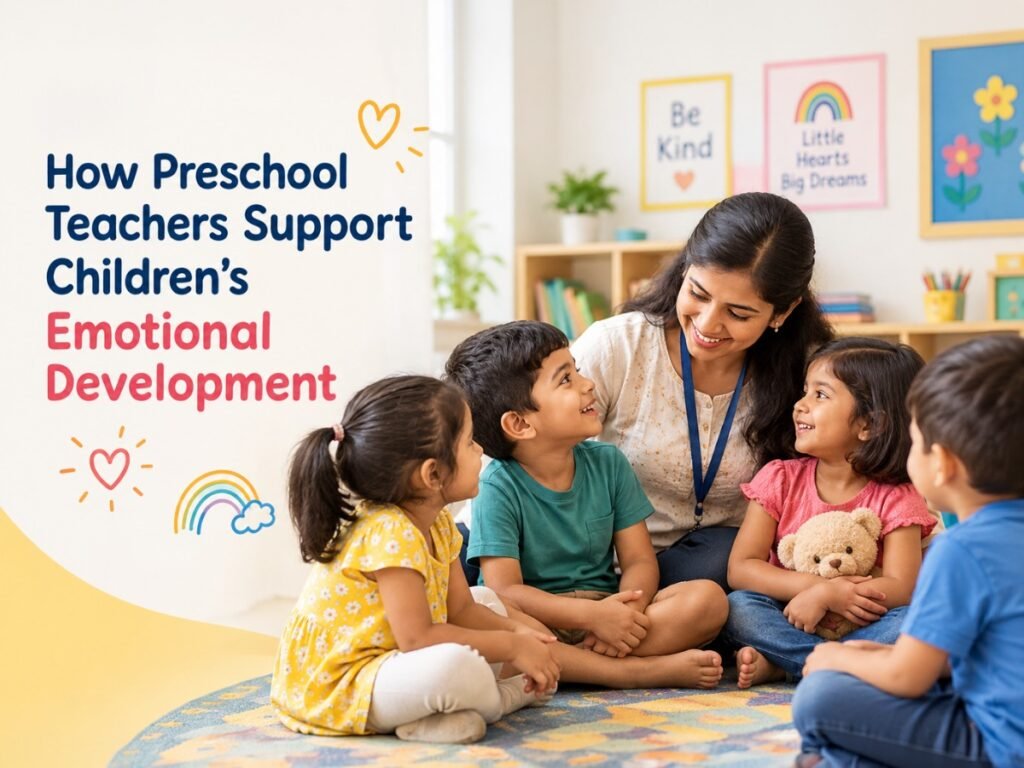
The preschool years are an important stage of child development. During this time, children learn more than letters, numbers, and classroom routines. They also begin to understand their feelings, communicate their needs, build relationships, and respond to different situations.
In a preschool in Bangalore, teachers spend a significant amount of time with young children and can play an important role in their emotional growth. A caring teacher can help children understand what they are feeling, express their emotions in healthy ways, develop confidence, and learn how to interact positively with others.
At Akshaya Bala Kuteera, children can experience a supportive environment where learning, interaction, and emotional growth can take place together. Through everyday classroom experiences, preschool teachers can guide children as they gradually develop emotional and social skills. Emotional development does not happen through one activity or lesson. It develops through daily conversations, play, group activities, classroom routines, and positive teacher-child relationships. These everyday experiences can help children build a strong foundation for their future growth.
Why Is Emotional Development Important in Preschool?
Young children experience many different emotions, but they may not always know how to identify or express them. A child may become angry when another child takes a toy, feel nervous when entering a new classroom, or become frustrated when an activity seems difficult. Emotional development helps children understand these feelings and learn appropriate ways to respond. It is an important part of early child development because emotional skills influence how children communicate, form relationships, manage challenges, and participate in learning.
A supportive preschool in Bangalore can provide children with regular opportunities to develop these skills in a safe and encouraging environment.
Children can gradually learn to:
- Recognise different emotions
- Express their feelings using words
- Understand how others may feel
- Manage frustration and disappointment
- Develop confidence and independence
- Build positive relationships
- Communicate their needs
- Handle simple disagreements
These skills can help children feel more comfortable both inside and outside the classroom.
How Do Preschool Teachers Support Emotional Development?
Preschool teachers support emotional development through many simple interactions that happen throughout the school day. They observe children’s behaviour, listen to their concerns, acknowledge their feelings, and guide them towards appropriate ways of responding.
Teachers do not need to turn every emotional experience into a formal lesson. A disagreement over a toy, a child feeling nervous about joining an activity, or frustration while completing a puzzle can all become opportunities for emotional learning. Through these everyday experiences, teachers can help children understand that emotions are normal and that they can learn how to manage them.
Helping Children Identify Their Feelings
Young children may know that they are upset but may not know whether they are feeling angry, sad, worried, disappointed, or frustrated. Teachers can introduce simple emotional words and use them during everyday conversations.
For example, when a child is upset because a toy is unavailable, the teacher can help the child describe the feeling and explain what happened. Gradually, the child may begin using words to communicate instead of relying only on crying or difficult behaviour. This is one of the simple ways a preschool in Bangalore can support children’s emotional awareness.
Encouraging Children to Express Their Emotions
Children need opportunities to express their feelings in ways that are respectful and understandable. Teachers can encourage children to talk about their experiences and listen when they want to share something.
Storytelling, drawing, pretend play, music, and classroom conversations can provide natural opportunities for emotional expression. A story about a child feeling nervous, for example, can lead to a simple discussion about situations that make children feel worried or excited. These activities can introduce social emotional learning in a way that feels natural to young children.
How Do Teachers Help Children Manage Strong Emotions?
Children are still developing the ability to manage strong emotions. When they feel angry, frustrated, tired, or disappointed, they may not immediately know how to calm themselves. Teachers can respond patiently and help children understand what is happening. Instead of expecting a child to control emotions immediately, they can teach simple strategies that children can practise over time.
Depending on the situation, a teacher may encourage a child to:
- Take a few slow breaths
- Pause before responding
- Talk about what happened
- Ask a teacher for help
- Use words to explain their feelings
- Try the activity again after calming down
The purpose is not to stop children from feeling difficult emotions. It is to help them understand their emotions and gradually develop healthy ways to respond.
How Does Social Emotional Learning Help Preschool Children?
Social emotional learning helps children develop skills for understanding themselves and interacting with others. In the preschool years, these skills are often introduced through normal classroom activities rather than formal instruction. Children learn by sharing materials, taking turns, listening to classmates, cooperating during group activities, and solving simple problems together. For example, if two children want the same toy, a teacher can help them explain what they want and understand the importance of taking turns. The experience teaches children about communication, patience, cooperation, and consideration for others.
A preschool in Bangalore that includes these experiences in everyday preschool learning can help children develop social and emotional skills alongside their early academic abilities.
How Do Preschool Teachers Build Children’s Confidence?
Confidence develops when children feel supported and have opportunities to try things for themselves. Teachers can encourage children by recognising their effort, listening to their ideas, and allowing them to take part in age-appropriate activities. If a child struggles to complete a puzzle or craft activity, the teacher can encourage the child to keep trying rather than focusing only on whether the activity was completed correctly.
Small responsibilities can also support confidence. Children can be encouraged to put away their materials, choose an activity, participate in classroom routines, or help with simple tasks. These experiences can help children develop a sense of independence and confidence while participating in preschool learning.
How Do Teachers Help Children Build Positive Relationships?
Preschool gives children regular opportunities to interact with other children. These interactions help them learn how to communicate, cooperate, share, and form friendships. Teachers can support these relationships by encouraging children to work together and guiding them when they find it difficult to communicate with classmates.
Children can learn important social skills such as:
- Sharing toys and materials
- Taking turns
- Listening to others
- Helping classmates
- Joining group activities
- Respecting personal space
- Communicating their needs
These everyday interactions contribute to social emotional learning and overall child development.
How Does the Teacher-Child Relationship Support Emotional Growth?
A positive relationship between a teacher and child can help children feel safe and comfortable in the classroom. When children know that their teacher will listen to them, they may become more willing to talk about their feelings and ask for help. Teachers can build this relationship by listening carefully, responding calmly, showing patience, and taking children’s concerns seriously.
For example, a child who feels nervous about joining a group activity may need reassurance before participating. A supportive teacher can acknowledge the child’s feelings and encourage the child to join when they feel ready. This sense of emotional security can make a significant difference in how children experience a preschool in Bangalore.
How Does Play Support Emotional Development?
Play is an important part of early childhood preschool learning and provides children with opportunities to explore emotions and social situations. Through pretend play, children can act out different situations and explore how people may feel. Group games can teach cooperation and turn-taking, while creative activities can provide children with another way to express themselves.
Teachers can observe children during play and provide guidance when they encounter social or emotional challenges. For example, if a child becomes upset because another child changes the rules of a game, the teacher can help the children talk about the situation and find a way to continue playing together. In this way, play becomes a natural opportunity for emotional and social development.
How Do Teachers Help Children Handle Conflicts?
Conflicts are a normal part of interacting with other children. Young children may disagree over toys, struggle to take turns, or become upset when another child does something they do not like. Teachers can help children understand these situations without immediately solving every problem for them. They can encourage children to explain what happened, listen to each other, and think about possible solutions.
Simple questions such as “What happened?” or “How did you feel?” can encourage children to communicate their experiences. With regular guidance, children can gradually learn that disagreements can be handled through communication, listening, sharing, and cooperation.
How Can Emotional Development Be Supported Through Everyday Preschool Learning?
Emotional development does not have to be separate from other areas of learning. Teachers can incorporate emotional skills into stories, art, games, group activities, classroom routines, and conversations. For example, a story can help children identify how a character feels. A group activity can teach cooperation. A classroom routine can encourage independence. A creative activity can give children an opportunity to express themselves.
This approach allows emotional learning to become part of the child’s normal experience rather than something that happens only during a specific activity. For a preschool in Bangalore, integrating emotional development into everyday learning can help create a balanced environment for young children.
What Should Parents Look for in a Preschool in Bangalore?
When choosing a preschool in Bangalore, parents may consider the curriculum, activities, safety, facilities, and location. It is also useful to understand how teachers support children’s emotional development.
Parents can look for a preschool where teachers:
- Listen patiently to children
- Encourage children to express their feelings
- Support positive teacher-child relationships
- Guide children through simple conflicts
- Encourage independence and confidence
- Provide opportunities for group interaction
- Include social and emotional skills in everyday learning
A caring and supportive classroom can help children feel comfortable while developing the emotional skills they need during their early years.
Supporting Children’s Emotional Growth at Akshaya Bala Kuteera
Children’s emotional development is an important part of their early years. By helping children recognise feelings, communicate emotions, build relationships, manage challenges, and develop confidence, preschool teachers can provide skills that support children throughout their growth. A preschool in Bangalore can make emotional development part of everyday learning through caring interactions, play, group activities, storytelling, encouragement, and positive guidance.
At Akshaya Bala Kuteera, creating a caring and engaging learning environment helps children learn, interact, express themselves, and grow with confidence. Emotional development, social emotional learning, child development, and preschool learning can work together to give children a strong foundation for their next stage of education.
Frequently Asked Questions
1. How Teachers Support Emotional Development in a Preschool in Bangalore
Preschool teachers support emotional development by helping children identify their feelings, encouraging them to communicate, teaching simple ways to manage emotions, supporting friendships, and guiding children through everyday conflicts.
2. Why is emotional development important in preschool?
Emotional development helps children understand their feelings, communicate their needs, build relationships, manage frustration, and develop confidence. These skills are an important part of early child development.
3. What is social emotional learning in preschool?
Social emotional learning helps preschool children develop skills such as emotional awareness, self-regulation, empathy, communication, cooperation, and relationship building.
4. How can a preschool in Bangalore support emotional development?
A preschool in Bangalore can support emotional development through positive teacher-child relationships, play, storytelling, group activities, emotional conversations, encouragement, and guidance during everyday social situations.
5. How do teachers help children manage anger?
Teachers can acknowledge the child’s feelings, help the child explain what happened, and introduce simple strategies such as taking a pause, breathing calmly, talking about the problem, and asking for help.
6. Can play support children's emotional development?
Yes. Play gives children opportunities to practise communication, cooperation, sharing, turn-taking, problem-solving, and emotional expression in an age-appropriate way.