

Preschool Admissions 2026: What Should Parents Know?
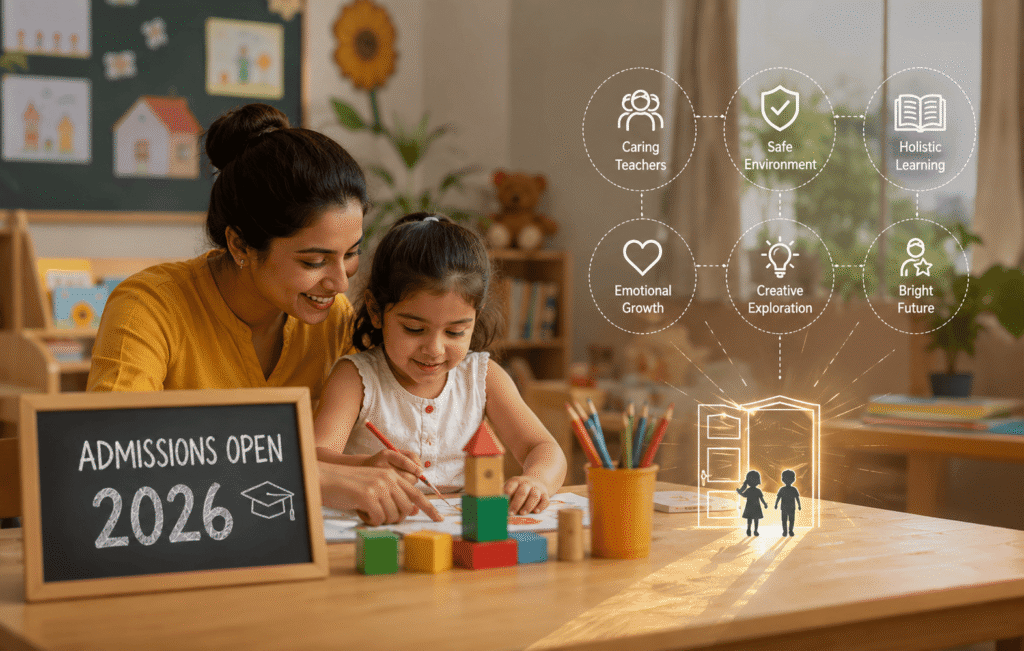
Choosing the right preschool is one of the first major educational decisions parents make for their child. With preschool admissions 2026 approaching, many parents are beginning to compare schools, understand age requirements, explore teaching methods, and prepare the documents needed for enrollment. However, choosing a preschool should involve more than simply finding a school close to home.
The early years provide an important foundation for a child’s learning, social development, communication, independence, and confidence. UNICEF notes that the early years are a particularly important period for growth and development, making quality early childhood education an important part of school readiness.
For parents looking for a nurturing and child-friendly learning environment, Akshaya Bala Kuteera focuses on creating enjoyable learning experiences through a Montessori-oriented and child-centered environment. Its preschool programmes include Play Group, Pre-KG, LKG and UKG, with age groups designed around different stages of early learning
When should parents start preschool admissions?
Parents should ideally begin researching preschools for admission in 2026 several months before the expected joining date. Starting early gives families enough time to compare schools, visit campuses, understand the curriculum and ask important questions. Admission timelines can vary from one preschool to another. Some schools may begin accepting enquiries well in advance, while others may have different enrollment periods depending on available seats.
Instead of waiting until the last moment, parents can create a simple checklist:
- Shortlist nearby preschools.
- Check the age eligibility for the desired class.
- Visit the shortlisted schools.
- Understand the curriculum and daily routine.
- Ask about safety and teacher-child interaction.
- Check the admission and fee structure.
- Keep required documents ready.
- Discuss the final choice with the family.
Starting early is particularly helpful when parents have specific preferences, such as a Montessori preschool, play-based learning environment, smaller class setting, or convenient location.
What age is right for preschool?
One of the most common questions parents ask during preschool admissions 2026 is whether their child is ready to begin preschool. The appropriate age can depend on the preschool level, the child’s development, and the school’s admission guidelines. Instead of comparing children with one another, parents should consider whether their child is gradually developing basic independence and communication skills.
For example, children may be encouraged to:
- Communicate simple needs.
- Interact with other children.
- Follow simple instructions.
- Participate in basic activities.
- Become comfortable with short periods away from parents.
- Develop basic self-care habits.
At Akshaya Bala Kuteera, the programmes cover different early learning stages, including Play Group for children around 1.8–3 years, Pre-KG for approximately 3–4 years, LKG for 4–5 years and UKG for 5–6 years. Parents should still confirm the applicable admission requirements directly with the school before applying.
What should parents look for in a preschool?
The best preschool is not necessarily the one with the longest list of facilities or the most impressive advertisements. A good preschool should provide a safe, welcoming and age-appropriate environment where children can learn naturally. During a preschool visit, parents should pay attention to how teachers communicate with children. Are children encouraged to ask questions? Do teachers listen patiently? Is the classroom organised and comfortable? Do children have opportunities to play, explore and interact?
Parents can also ask about:
Teaching approach: Does the preschool use play-based, Montessori or another age-appropriate learning approach?
Classroom environment: Are children given opportunities for individual and group activities?
Teacher interaction: Do teachers respond patiently and respectfully to young children?
Safety: What measures are followed for child safety, supervision and hygiene?
Daily routine: How are learning, play, meals, rest and outdoor activities balanced?
Parent communication: How does the school share information about a child’s progress?
These questions can help parents understand what everyday life at the preschool may actually look like.
Why is play-based learning important?
Preschool should not feel like a smaller version of primary school. Young children learn through exploration, interaction, movement, stories, activities and play. Play-based learning can support several areas of development at the same time. Children can practise communication while playing with others, develop problem-solving skills through activities, and strengthen fine motor skills through drawing, building and craft work.
Research-based guidance from NAEYC also highlights the importance of intentional play opportunities in preschool learning and development. This is why parents should not judge a preschool only by how many worksheets children complete. A classroom where children are actively exploring and participating can provide meaningful learning experiences.
At Akshaya Bala Kuteera, the learning environment incorporates Montessori materials, puzzles, art and craft activities, and other experiences designed to make early learning enjoyable
What makes a Montessori preschool different?
A Montessori preschool generally places emphasis on independence, hands-on experiences, exploration and learning at a child’s developmental level. Instead of expecting every child to learn in exactly the same way and at the same pace, Montessori environments encourage children to interact with carefully selected learning materials and develop skills through practical experiences.
For parents considering Montessori education, it is useful to visit the classroom rather than relying only on the term “Montessori.” Ask how Montessori principles are actually incorporated into the daily programme. Akshaya Bala Kuteera describes its environment as child centered and follows Montessori principles, with learning experiences designed around children’s natural curiosity and individual interests.
What documents are needed for preschool admission?
The exact preschool admission documents can vary between schools. Parents should request the latest checklist directly from the preschool because requirements can change.
Commonly requested documents may include:
- Child’s birth certificate or age proof
- Recent photographs
- Parent or guardian identification documents
- Address proof
- Previous school records, if applicable
- Medical or vaccination information, where required
- Completed admission or registration form
It is a good idea to keep digital and physical copies of important documents ready. Parents should also check spellings of the child’s name, date of birth and other details before submitting the application.
How should parents prepare their child for preschool?
Getting admission is only one part of the process. Helping a child become comfortable with the idea of preschool can make the transition easier. Parents can start by talking positively about school. Explain that the child will meet teachers, make friends, play, listen to stories and participate in activities. Avoid using school as a threat or punishment.
A predictable routine can also help. Gradually adjusting sleeping, waking and meal times before school begins may make the first few weeks easier. Simple activities at home can build independence too. Encourage the child to put away toys, wash hands, eat independently when appropriate, communicate their needs and participate in small household tasks.
What questions should parents ask during a school visit?
A school visit is an opportunity to look beyond brochures and advertisements. Parents should use the visit to understand how the preschool operates on an ordinary day.
Some useful questions include:
- What curriculum or teaching approach is followed?
- How many children are there in each class?
- How are children supported during the settling-in period?
- How does the school handle separation anxiety?
- What activities are included in the daily routine?
- How are parents updated about their child’s development?
- What safety and hygiene practices are followed?
- How does the school respond when a child needs additional support?
- What are the timings and holiday schedules?
- What are the admission and fee-related requirements?
Parents should also observe the atmosphere. A calm classroom, supportive teachers and children who appear comfortable can tell parents a great deal about the learning environment.
How can parents compare preschool fees?
Preschool fees are naturally an important part of the admission decision, but cost should not be the only deciding factor. Parents should understand what is included in the quoted fee. Depending on the school, additional costs may apply for learning materials, activities, transportation, meals, uniforms or other services.
Rather than comparing only the final amount, parents can compare the overall value offered by each preschool. Consider the learning environment, teacher support, classroom experience, safety, activities, communication with parents and convenience along with the fee structure. A clear discussion about fees before admission can also help families avoid misunderstandings later.
Is location important when choosing a preschool?
Yes. Location can have a practical impact on a child’s daily routine. A preschool that is excessively far from home may result in long travel times, which can be tiring for young children. Parents should consider the distance, transportation arrangements, traffic conditions and how easily the child can maintain a consistent daily schedule.
For families searching for a preschool in Bangalore, convenience can be particularly important because daily travel time may vary significantly depending on the area and time of day. However, location should be balanced with educational quality. The closest preschool is not automatically the right preschool if it does not meet the family’s expectations for learning, care and safety.
How can parents make the final decision?
After visiting several schools, parents can compare them using the same criteria. This makes it easier to identify the preschool that fits their child’s needs instead of choosing based only on first impressions.
A simple comparison can include:
| Factor | What to consider |
|---|---|
| Learning approach | Montessori, play-based or other age-appropriate methods |
| Teachers | Experience, communication and interaction with children |
| Safety | Supervision, hygiene and child-safety practices |
| Environment | Clean, welcoming and child-friendly classrooms |
| Activities | Creative, physical, social and learning activities |
| Location | Travel time and convenience |
| Communication | Parent-teacher interaction and updates |
| Fees | Overall cost and what is included |
What happens after preschool admission?
Once the admission is confirmed, the next step is preparing the child emotionally and practically for the new routine. Parents can visit the school again if permitted, introduce the child to the idea of their new classroom and practise simple routines at home. A familiar routine can help children feel more secure.
It is also important to maintain communication with teachers during the first few weeks. Parents and teachers can work together to understand the child’s adjustment, interests and areas where additional support may be useful.
Frequently Asked Questions
1. When should I apply for preschool admission in 2026?
Parents should start researching schools early and check each preschool’s admission schedule. Application and enrollment timelines can differ between schools, so contacting the preferred preschool directly is recommended
2. What should I consider before choosing a preschool?
Parents should consider the teaching approach, teachers, safety, classroom environment, activities, location, parent communication and fee structure. The child’s individual needs and comfort should remain central to the decision.
3. Is Montessori suitable for preschool children?
Montessori education can be suitable for young children when it is implemented appropriately and provides a child-centered environment with hands-on learning opportunities. Parents should visit the school and understand how Montessori principles are applied in practice.
4. How can I prepare my child for the first day of preschool?
Create a positive impression of school, establish a consistent routine, encourage age-appropriate independence and talk openly about what the child can expect. Avoid creating unnecessary pressure around the first day.
5. What skills should a child have before starting preschool?
Children do not need to master academic skills before entering preschool. Basic communication, social interaction, following simple routines and gradually developing independence can help them adjust to the new environment.