

How Preschool Helps Children Learn to Share and Cooperate
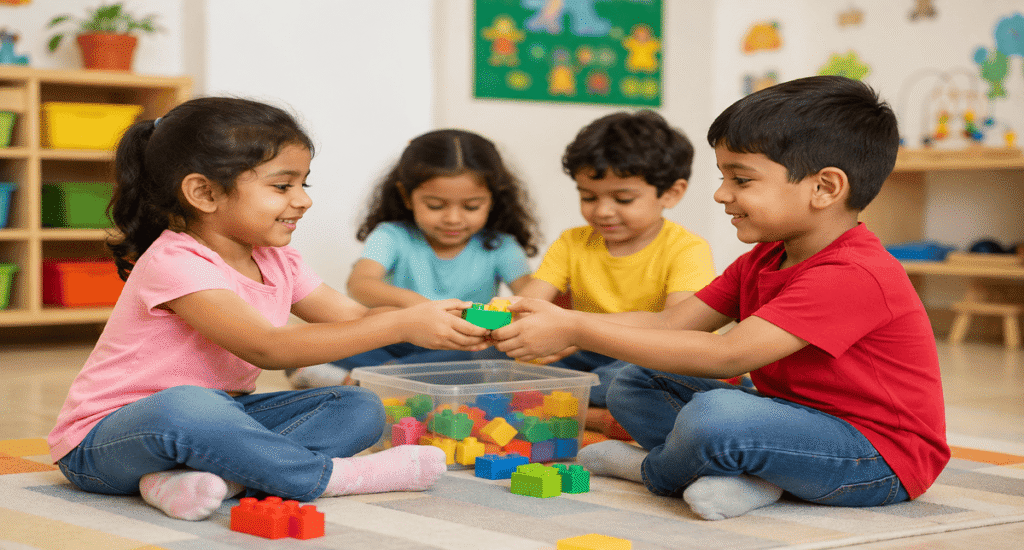
Starting preschool is one of the most important milestones in a child’s early life. It is not only a place where children learn alphabets and numbers, but also where they begin to understand emotions, friendships, teamwork, and communication. At Akshaya Bala Kuteera, children are encouraged to grow in a nurturing environment that supports both academic and social development.
Many parents today look for a play school that focuses on child development, social skills, and emotional growth. Toddler school learning activities help children interact with others, understand feelings, and develop cooperation skills naturally through play and classroom experiences. These early lessons create a strong foundation for future learning and relationships.
Why Is Sharing Important for Preschool Children?
Sharing is one of the first social skills children learn in early childhood learning. Young children are naturally attached to their toys and belongings, so learning to share takes time and guidance. In a preschool environment, children regularly participate in group activities where they learn patience, kindness, and empathy. Teachers encourage sharing during playtime, storytelling sessions, and classroom games. Through these daily experiences, children slowly understand the importance of taking turns and respecting others. These simple habits improve preschool emotional development and help children become more confident in social situations.
Preschool also helps children learn that sharing can create friendships and make activities more enjoyable. Over time, children begin to cooperate willingly instead of being forced to participate.
How Does Preschool Teach Cooperation Skills?
Cooperation skills are developed when children work together toward a common goal. In childcare center classrooms, children often participate in activities that require teamwork. Whether they are building blocks together, cleaning up toys, or participating in art projects, they learn how to communicate and collaborate.
Some common preschool learning activities that encourage cooperation include:
- Group storytelling
- Team games
- Classroom cleaning activities
- Music and dance sessions
- Role-play activities
- Puzzle-solving games
These activities teach children how to listen to others, wait for their turn, and solve small conflicts peacefully. Such experiences are essential for healthy child development and future academic success.
What Role Does Play Have in Social Skills Development?
Play is one of the most effective ways children learn social skills. During playtime, children naturally interact, negotiate, and express emotions. This helps them improve communication skills and emotional understanding. At a quality childcare center and daycare near me, children are given opportunities for both structured and free play. Structured play teaches discipline and teamwork, while free play allows children to explore creativity and social interaction independently.
For example, when children play pretend games like “shopkeeper” or “teacher,” they learn how to communicate, cooperate, and understand different perspectives. These playful moments support emotional growth in children and improve their confidence in group settings.
How Do Teachers Encourage Positive Social Behaviour?
Teachers play a major role in shaping children’s behavior during their early education journey. Kindergarten teachers guide children gently and encourage positive actions instead of punishment-based learning.
Some ways teachers promote social skills include:
- Praising good behavior
- Encouraging teamwork
- Teaching polite communication
- Helping children express emotions
- Solving conflicts calmly
- Creating inclusive classroom activities
When children receive positive reinforcement, they feel safe and motivated to participate. This creates a child-friendly preschool environment where learning becomes enjoyable and meaningful. At Akshaya Bala Kuteera, teachers focus on holistic child development by helping every child feel valued and included.
Can Preschool Improve Communication Skills?
Yes, kindergarten significantly improves communication skills in children. Many toddlers initially struggle to express their thoughts and emotions clearly. Through regular classroom interaction, children gradually learn new vocabulary, sentence formation, and listening skills.
Activities like storytelling, singing rhymes, classroom discussions, and group play improve verbal communication naturally. Children also learn non-verbal communication such as facial expressions, gestures, and understanding emotions.
Strong communication skills are important because they help children:
- Build friendships
- Express feelings confidently
- Ask questions without fear
- Participate in classroom activities
- Develop leadership qualities
Early learning communication skills also prepare children for primary school education and future teamwork situations.
How Does Preschool Help Emotional Development?
Emotional development is a key part of early childhood education. kindergarten helps children understand feelings such as happiness, sadness, frustration, excitement, and empathy. In a supportive classroom environment, children learn how to manage emotions in healthy ways. For example, if a child feels upset during playtime, teachers help them communicate their feelings instead of reacting aggressively.
This process teaches emotional control and patience. Children slowly become more independent and emotionally secure. Preschool emotional development also helps children adapt easily to new environments and social situations.
Activities like circle time discussions, storytelling, and friendship-building games help children recognize emotions in themselves and others.
Why Are Group Activities Important in Preschool?
Group activities create opportunities for classroom collaboration and teamwork activities for kids. These activities teach children how to function as part of a group rather than individually.
Some benefits of group activities include:
- Better cooperation skills
- Improved listening habits
- Increased confidence
- Stronger friendships
- Better problem-solving abilities
- Respect for others’ opinions
Children also learn leadership and responsibility during group tasks. These experiences are essential for long-term social and academic success. Parents searching for the best kindergarten in Whitefield often prioritize schools that focus on social interaction in early learning because these skills shape a child’s personality from an early age.
How Does Preschool Prepare Children for School Life?
Preschool prepares children for formal education by teaching discipline, routines, communication, and independence. Children become familiar with classroom environments, schedules, and learning through play. This transition becomes smoother when children have already developed sharing and cooperation skills. They feel more comfortable participating in classroom discussions and group activities.
Programs for preschoolers also encourage curiosity and confidence, making children excited about learning rather than fearful of school. Children who attend preschool often adapt faster to kindergarten because they already understand:
- Classroom behavior
- Teamwork
- Listening skills
- Basic communication
- Following instructions
- Social interaction
This early preparation plays a major role in future academic growth.
What Should Parents Look for in a Preschool?
Choosing the right kindergarten is important for a child’s overall development. Parents should look for a preschool that offers both academic learning and emotional support.
Some important factors to consider include:
- Safe and child-friendly environment
- Experienced teachers
- Interactive preschool education
- Focus on social and emotional learning
- Play-based learning methods
- Small classroom sizes
- Good communication with parents
Parents looking for a Montessori kindergarten or preschool in Bangalore should also ensure the school encourages positive behavior learning and interactive classroom activities. You can explore the programs offered by Akshaya Bala Kuteera to understand how early childhood learning supports children’s emotional and social growth.
How Can Parents Support Sharing and Cooperation at Home?
can help children practice sharing and teamwork naturally.
Parents can encourage cooperation by:
- Playing board games together
- Teaching turn-taking during play
- Involving children in household tasks
- Encouraging polite communication
- Reading stories about kindness and friendship
- Appreciating positive behavior
Consistency between home and kindergarten creates stronger learning outcomes for children.
Conclusion
Preschool plays a major role in helping children develop sharing, cooperation skills, communication, and emotional understanding. These early experiences shape a child’s confidence, behavior, and ability to build healthy relationships in the future.
A nurturing preschool environment allows children to learn through play, teamwork, and interactive experiences that support overall child development. At Akshaya Bala Kuteera, children are encouraged to grow socially, emotionally, and academically through engaging preschool learning activities designed for holistic development.
Frequently Asked Questions
1. At what age should children start preschool?
Most children start kindergarten between the ages of 2.5 and 4 years. The right age depends on the child’s emotional readiness and communication abilities.
2. How does preschool help with social skills?
kindergarten helps children develop social skills through group play, teamwork activities, communication exercises, and interactive classroom learning.
3. Why is sharing important for preschoolers?
Sharing teaches children empathy, patience, cooperation, and respect for others. These skills help children build healthy friendships and confidence.
4. Can shy children benefit from preschool?
Yes, kindergarten provides a supportive environment where shy children gradually become comfortable interacting with teachers and classmates.
5. What activities improve cooperation skills in children?
Activities like group games, storytelling, role-play, art projects, and team-building exercises help improve cooperation skills.
6. How do preschool teachers handle conflicts between children?
Teachers usually guide children calmly, encourage communication, and help them understand emotions to resolve conflicts peacefully.