

How Children Express Emotions Through Art Activities | Akshaya Bala Kuteera
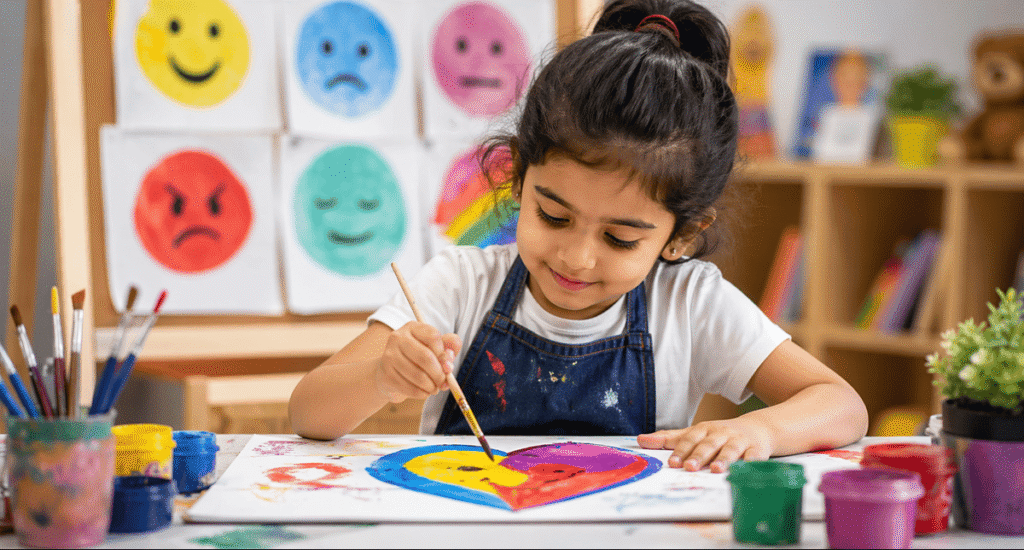
Children often find it difficult to express their feelings using words, especially during their early years. At Akshaya Bala Kuteera, a trusted preschool in Bangalore, we focus on nurturing emotional development through art therapy, creative expression, and social emotional development activities. These approaches help children communicate their inner thoughts in a safe and meaningful way.
In a well-designed daycare preschool curriculum, art is not just an activity, it becomes a language. Through drawing, painting, and storytelling, children begin to express emotions like happiness, fear, excitement, or frustration without hesitation. This makes art therapy a powerful tool in early childhood education.
Why Do Children Express Emotions Through Art?
Art allows children to communicate beyond words. Unlike adults, young children may not have the vocabulary to explain their emotions. This is where creative expression becomes essential. When a child picks up a crayon or paintbrush, they are not just creating shapes, they are telling a story. Colors, patterns, and strokes often reflect their inner emotional state.
Some common ways children express emotions through art include:
- Bright colors for happiness and excitement
- Dark or heavy strokes for anger or frustration
- Repetitive patterns for comfort or anxiety
- Abstract drawings for confusion or curiosity
This form of non-verbal communication helps parents and teachers better understand a child’s emotional needs.
How Does Art Support Emotional Development in Children?
Art is more than just a fun activity, it is a key part of child emotional development. Engaging in creative activities helps children process their feelings in a healthy way. At a well-structured daycare preschool curriculum, art is used intentionally to build emotional skills.
Here’s how art supports emotional growth:
- Builds Emotional Awareness: Children learn to identify and name their feelings through colors and visuals.
- Encourages Self-Expression: Art gives children the freedom to express without fear of being wrong.
- Reduces Stress and Anxiety: Creative activities act as a calming tool, helping children relax.
- Improves Confidence: Completing an artwork gives children a sense of achievement.
- Enhances Social Emotional Development: Group art activities teach sharing, empathy, and collaboration.
Why Do Children Use Drawing to Express Feelings?
Drawing is one of the most natural forms of creative expression for children. When children engage in drawing feelings, they often communicate emotions that they cannot explain in words.
For example, bright colors may represent joy, while darker shades can indicate sadness or frustration. Repeated shapes or patterns may reflect comfort or anxiety. These visual cues help parents and teachers understand what a child might be experiencing internally.
Instead of analyzing drawings too deeply, it is better to gently ask questions like:
- “What did you draw?”
- “How were you feeling when you made this?”
This builds trust and encourages open communication, which is essential for emotional development.
What Are the Best Art Therapy Activities for Children?
Different art activities help children express emotions in unique ways. At Akshaya Bala Kuteera, we design activities that align with Montessori preschool principles and encourage exploration.
Some effective activities include:
1. Free Drawing and Coloring
Children are given complete freedom to draw anything they want. This helps in natural emotional expression without restrictions.
2. Finger Painting
This sensory activity allows children to physically engage with colors, helping release emotions like stress or excitement.
3. Story-Based Art
Children draw scenes based on stories, which helps them connect emotions with narratives.
4. Clay Modeling
Working with clay improves focus and allows children to express feelings through shapes and forms.
5. Group Art Projects
These activities promote social emotional development by encouraging teamwork and sharing.
How Does Creative Expression Improve Social Emotional Development?
Creative activities don’t just help individual expression; they also strengthen social skills. When children participate in group art sessions, they learn to:
- Share materials and space
- Respect others’ ideas
- Express opinions confidently
- Develop empathy
This combination of creative expression and social emotional development prepares children for real-world interactions.
Why Is Art Important in a Preschool Curriculum?
A strong daycare preschool curriculum integrates art as a core component rather than treating it as an optional activity.
In a quality Montessori preschool, art is used to:
- Support cognitive and emotional growth
- Enhance fine motor skills
- Encourage independent thinking
- Build problem-solving abilities
For parents searching for the best preschool in Bangalore, it’s important to choose a school that prioritizes holistic development, not just academics.
How Can Parents Support Emotional Development Through Art at Home?
Parents play a key role in supporting their child’s emotional journey. Encouraging art at home can significantly improve emotional development and confidence.
Simple ways to encourage creative expression:
- Create a small art corner with crayons, paper, and colors
- Allow children to draw freely without instructions
- Avoid judging or correcting their artwork
- Talk to them about their creations
- Use art as a daily activity, not just a hobby
Consistency is key. Even 15 – 20 minutes of creative time daily can significantly improve a child’s emotional health.
What Makes Akshaya Bala Kuteera Different from Other Preschools?
When it comes to choosing a preschool in Bangalore, parents often look for a balance between academics and emotional growth. Akshaya Bala Kuteera stands out by focusing on the overall development of every child.
Here’s what makes the school unique:
- Holistic Learning Approach: Equal importance is given to emotional, social, and cognitive development.
- Art-Integrated Curriculum: Creative activities are embedded into daily learning, not treated as extras.
- Child-Centered Environment: Every child is encouraged to learn at their own pace.
- Focus on Emotional Intelligence: Activities are designed to build confidence, empathy, and self-awareness.
- Safe and Nurturing Space: Children feel comfortable expressing themselves freely.
If you’re looking for the best preschool in Bangalore that truly understands your child’s emotional needs, Akshaya Bala Kuteera is a trusted choice.
Conclusion
Art is a powerful tool that helps children express emotions in a natural and healthy way. Through art therapy, creative expression, and structured preschool activities, children develop confidence, emotional awareness, and social skills.
At Akshaya Bala Kuteera, we are committed to nurturing every child’s emotional development through a well-balanced and engaging learning environment. If you are searching for a preschool in Bangalore that truly understands your child’s needs, we are here to help them grow, express, and thrive.
Frequently Asked Questions:
1. How does art therapy help children?
Art therapy helps children express emotions, reduce stress, and improve emotional development through creative activities.
2. Why is art important for emotional development in children?
Art encourages self-expression, reduces stress, and helps children understand their emotions better, contributing to overall emotional development.
3. What is art therapy for kids?
Art therapy uses creative activities like drawing and painting to help children explore and express their emotions in a safe environment.
4. How can I understand my child’s drawings?
Instead of analyzing, ask your child to explain their drawing. This helps you understand their thoughts and feelings more accurately.
5. Which preschool is best for emotional development in Bangalore?
A preschool that focuses on holistic learning, like Akshaya Bala Kuteera, is ideal for nurturing both emotional and academic growth.
6. What is creative expression in children?
Creative expression includes activities like drawing, painting, and storytelling that allow children to communicate their thoughts and emotions.