

Wholesome Kindergarten Curriculum for Future Leaders
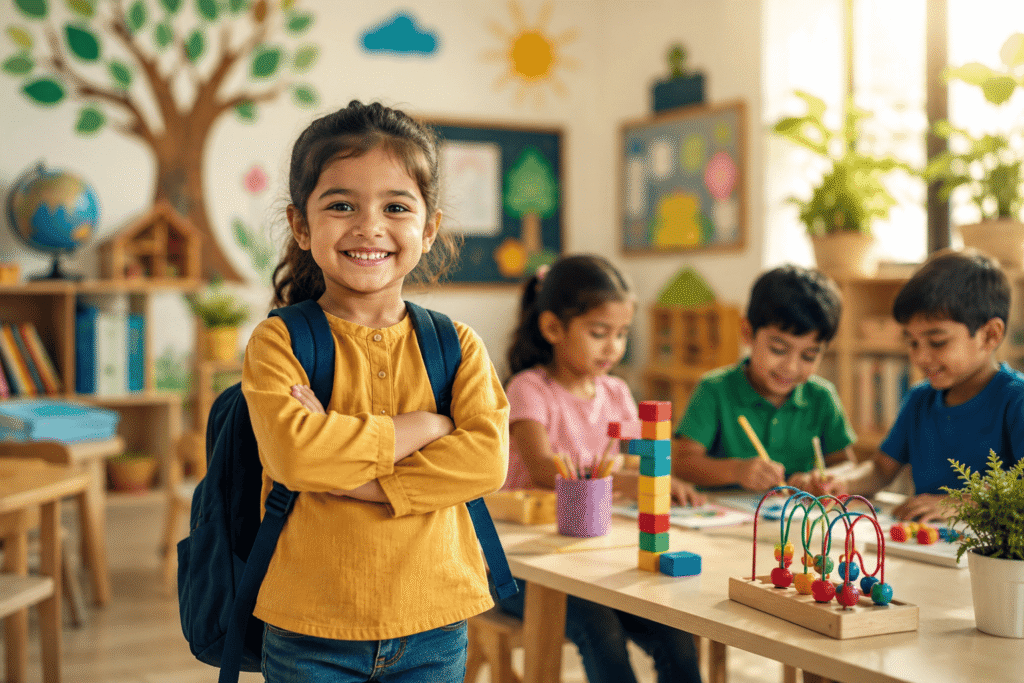
The kindergarten years are an important stage in a child’s development. Children begin to become more independent, communicate their ideas, build friendships, solve simple problems, and understand the world around them. A wholesome kindergarten curriculum can bring all these experiences together while making learning enjoyable and meaningful.
At Akshaya Bala Kuteera, kindergarten education can focus on developing the whole child rather than concentrating only on academic skills. A balanced kindergarten curriculum can combine early academics with play, creativity, communication, social-emotional learning, physical activities, and practical experiences. The objective is not to make young children follow a rigid academic routine. Instead, it is to give them the confidence, curiosity, independence, and foundational skills that can help them grow into capable and responsible future leaders.
What Is a Wholesome Kindergarten Curriculum?
A wholesome kindergarten curriculum focuses on the overall development of children. It gives importance to academic learning while also creating opportunities for children to develop socially, emotionally, physically, and creatively.
A well-rounded curriculum can include:
- Early reading and writing
- Basic mathematical concepts
- Storytelling and communication
- Art, music, and creative activities
- Play-based learning
- Outdoor exploration
- Social-emotional learning
- Problem-solving activities
- Practical life skills
- Group activities and collaboration
This balanced approach allows children to learn different skills naturally instead of treating every learning goal as a separate academic task.
How Can Play Prepare Future Leaders?
Children learn naturally through play. When they build something with blocks, participate in pretend play, complete a puzzle, or play a group game, they are making decisions and learning how to interact with others.
Play-based learning can help children develop:
- Creativity and imagination
- Decision-making skills
- Problem-solving abilities
- Communication
- Cooperation
- Patience and turn-taking
- Confidence
- Independent thinking
For example, children building a tower may discover that their structure keeps falling. Instead of immediately giving them the solution, a teacher can encourage them to think about what they could change. This simple experience teaches children that challenges can be approached in different ways. It also helps develop a growth-oriented attitude towards learning.
What Leadership Skills Can Children Learn?
Leadership development in kindergarten does not mean giving children formal leadership responsibilities. At this age, leadership begins with simple everyday behaviours.
A kindergarten curriculum for leadership skills can encourage children to:
- Express their ideas confidently
- Listen when others are speaking
- Make age-appropriate choices
- Help classmates
- Take responsibility for simple tasks
- Participate in group activities
- Respect different opinions
- Try new activities
- Solve small problems independently
- Learn from mistakes
A child who volunteers to distribute classroom materials, helps a friend complete an activity, or confidently shares an idea is already developing important leadership qualities. These small experiences can gradually build confidence and responsibility.
Why Is Social-Emotional Learning Important?
Children need to understand their emotions and learn how to interact positively with others. This is why social-emotional learning is an important part of a wholesome approach to kindergarten education. Through stories, conversations, role play, and group activities, children can learn about emotions such as happiness, sadness, anger, excitement, and frustration.
Teachers can help children understand:
- How to express feelings appropriately
- How to listen to others
- How to share and take turns
- How to ask for help
- How to manage small disagreements
- How to show empathy
- How to build positive friendships
These skills can make children more comfortable in social situations and help them develop healthy relationships.
How Does Creativity Support Future-Ready Skills?
The ability to think creatively can become increasingly valuable as children grow. Creativity allows children to look at situations from different perspectives and consider multiple possibilities.
A holistic education programme can provide opportunities for children to explore:
- Drawing and painting
- Music and movement
- Story creation
- Drama and role play
- Building and construction
- Craft activities
- Imaginative games
- Open-ended art projects
Not every creative activity needs to have one correct result. Giving children the freedom to experiment allows them to develop their own ideas. For example, instead of asking every child to create an identical drawing, an educator can provide different materials and ask children to create something based on their imagination. This supports creativity while also developing confidence and independent thinking.
Can Kindergarten Develop Problem-Solving Skills?
Yes. Children encounter small problems throughout the kindergarten day, and these situations can become valuable learning opportunities.
A teacher might ask:
“How can the blocks be arranged so the tower does not fall?”
“What can be done if two children want the same toy?”
“How can these objects be grouped?”
These questions encourage children to think rather than simply wait for an answer.
A child-centered learning approach can allow children to:
- Identify a simple problem.
- Think about possible solutions.
- Try one solution.
- Observe what happens.
- Make changes if necessary.
- Try again.
This process can help children understand that making mistakes is not necessarily failure. It can be part of discovering a better solution.
Why Are Communication Skills Essential?
Strong communication skills can help children express their thoughts, understand others, and participate confidently in different situations. A good early childhood education programme can develop communication through everyday activities such as:
- Storytelling
- Picture discussions
- Songs and rhymes
- Group conversations
- Show-and-tell
- Role play
- Question-and-answer activities
- Reading sessions
Teachers can also encourage children to explain their thinking rather than responding with only one-word answers.
How Can Everyday Tasks Build Independence?
Independence is another important foundation for future development. Children can begin developing this quality through simple age-appropriate responsibilities.
A kindergarten classroom can encourage children to:
- Pack and organise their belongings
- Put toys and materials away
- Choose between suitable activities
- Help prepare classroom materials
- Take care of books and toys
- Water plants
- Keep their learning space organised
- Complete simple classroom responsibilities
These activities may appear small, but they help children understand responsibility and develop confidence in doing things independently. Developing life skills for children at an early age can also make them more comfortable handling everyday situations as they grow.
What Role Does Exploration Play?
Children are naturally curious. They want to know how things work, why something happens, and what happens when they try something different. A wholesome kindergarten curriculum can use this curiosity through hands-on exploration.
Activities may include:
- Nature walks
- Gardening
- Simple science experiments
- Water and sand exploration
- Sensory activities
- Observing plants and insects
- Building and construction
- Outdoor games
How Does Holistic Education Support Children?
Holistic education looks at children’s development from multiple perspectives. Academic progress remains important, but it is combined with social, emotional, physical, creative, and practical development.
A holistic kindergarten environment can help children develop:
| Development Area | Skills Children Can Build |
|---|---|
| Academic | Early literacy, numeracy, observation |
| Social | Cooperation, sharing, friendships |
| Emotional | Self-awareness, empathy, confidence |
| Physical | Coordination, movement, motor skills |
| Creative | Imagination, expression, innovation |
| Practical | Independence, responsibility, decision-making |
This balanced approach can help children develop a strong foundation for their next stages of education.
What Should Parents Look for in Kindergarten?
Parents choosing a kindergarten should look beyond worksheets and memorisation. The learning environment and teaching approach are equally important.
Some useful things to look for include:
- A safe and welcoming classroom
- Opportunities for play and exploration
- Age-appropriate academic activities
- Creative learning opportunities
- Outdoor experiences
- Positive teacher-child interactions
- Opportunities for children to make choices
- Group activities and collaboration
- Social-emotional development
- Encouragement of curiosity and questions
Parents can also ask how teachers respond when children make mistakes. A supportive environment should encourage children to try again, think differently, and learn from the experience.
How Can Parents Support Learning at Home?
The development of future-ready skills does not stop when the kindergarten day ends. Everyday home experiences can reinforce what children learn in school.
Parents can encourage learning by:
- Reading stories together
- Asking open-ended questions
- Letting children make simple choices
- Encouraging imaginative play
- Involving children in household tasks
- Exploring nature together
- Talking about emotions
- Allowing children to solve simple problems
- Encouraging children to explain their ideas
The focus does not need to be on creating another classroom at home. Simple conversations, games, stories, and everyday responsibilities can provide meaningful learning opportunities.
Is a Wholesome Curriculum Important for Future Leaders?
A wholesome kindergarten curriculum for future leaders provides children with a foundation that goes beyond academic knowledge. Future leaders need to communicate clearly, work with others, make thoughtful decisions, remain curious, manage challenges, and understand different perspectives. These qualities can begin developing through simple experiences during the early years.
A child who learns to listen to a friend, try a different solution, take responsibility for a classroom task, or confidently share an idea is developing skills that can remain valuable throughout life. The purpose is not to rush childhood or place unnecessary pressure on young learners. It is to give children the right environment to discover their abilities at their own pace.
Nurturing Future Leaders Starts Early
The foundation for future leadership does not begin with formal titles or complicated responsibilities. It begins with small experiences that help children become confident, curious, responsible, and caring individuals.
A wholesome kindergarten curriculum can bring these qualities together through play-based learning, holistic education, creativity, communication, exploration, social-emotional development, and age-appropriate academics.
At Akshaya Bala Kuteera, creating meaningful early learning experiences can help children discover their strengths while developing the confidence and skills needed for the years ahead. When children are given opportunities to explore, question, create, collaborate, and make choices, they are not simply preparing for the next grade, they are building a strong foundation for becoming capable and future-ready individuals.
Frequently Asked Questions
1. What is a wholesome kindergarten curriculum?
A wholesome kindergarten curriculum combines academic learning with play, creativity, communication, social-emotional development, physical activities, exploration, and practical life experiences.
2. How does kindergarten prepare children for the future?
Kindergarten can develop foundational future-ready skills such as communication, creativity, collaboration, independence, curiosity, decision-making, and problem-solving.
3. Why is play-based learning important in kindergarten?
Play-based learning allows children to explore ideas, make choices, communicate, cooperate, experiment, and solve problems in an engaging and age-appropriate way.
4. What leadership skills can children learn in kindergarten?
Children can begin developing confidence, responsibility, empathy, communication, cooperation, decision-making, initiative, and problem-solving through everyday classroom experiences.
5. What is holistic education in kindergarten?
Holistic education focuses on the overall development of children by combining academic, social, emotional, physical, creative, and practical learning.
6. How can parents develop leadership qualities in young children?
Parents can encourage leadership by allowing children to make simple choices, complete age-appropriate responsibilities, express their opinions, solve small problems, help others, and learn from mistakes.