

Why Preschoolers Learn at Different Speeds & How to Support Them | Akshaya Bala Kuteera
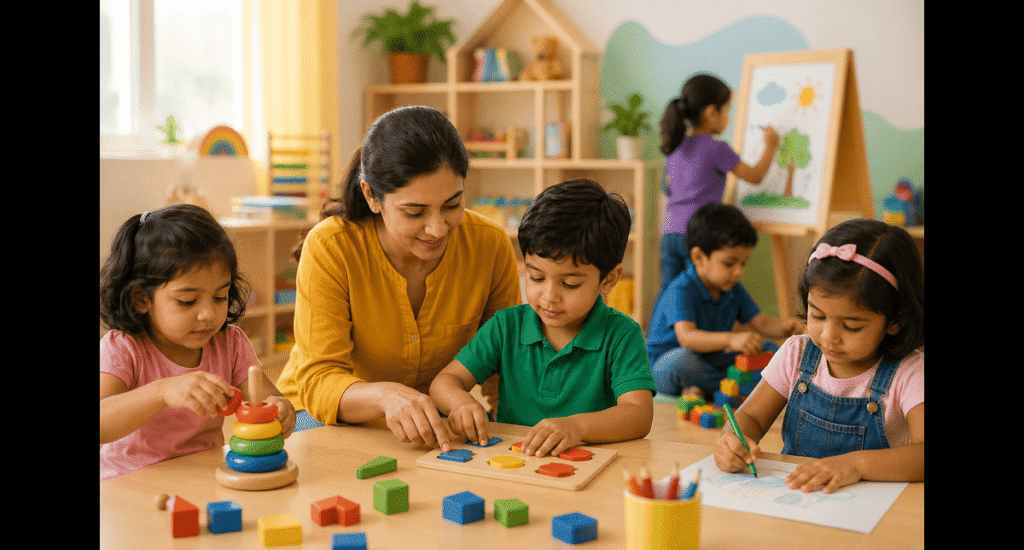
Every child grows, learns, and explores the world differently. Some preschoolers quickly recognize letters and numbers, while others may take more time to develop language, social, or motor skills. This is completely natural. At Akshaya Bala Kuteera, understanding and supporting different learning speeds is an essential part of nurturing healthy child development.
In early education, children are not expected to learn at the same pace. Just like walking or talking milestones can vary, learning abilities also differ based on personality, environment, emotional development, and exposure. A supportive pre school creates an environment where every child feels confident, encouraged, and understood.
Parents often worry when comparing their child’s progress with others, but learning differences do not always indicate a problem. In many cases, children simply have unique learning styles and developmental timelines. The goal of preschool education is to recognize these differences and guide each child through personalized learning experiences.
Why Do Preschoolers Learn at Different Speeds?
Children develop skills based on several factors, including genetics, home environment, social interaction, and emotional readiness. Some children are visual learners, while others respond better to hands-on activities or verbal communication.
A few key reasons include:
- Cognitive development stages vary naturally
- Exposure to books, play, and conversation at home differs
- Emotional confidence impacts participation
- Attention span develops differently in each child
- Social comfort can influence classroom engagement
For example, one child may quickly develop language skills but need extra help with motor coordination, while another may excel in physical activities but take longer to communicate. These learning differences are a normal part of early childhood learning.
Is It Normal for Some Children to Learn Slower in Preschool?
Yes, absolutely. In preschool education, “slower” does not mean incapable. It often means a child needs a different teaching approach, more repetition, or additional emotional support.
Many children thrive once they are introduced to play-based learning strategies that match their pace. At a quality early learning center, teachers observe how each child learns and adapt activities accordingly.
Signs that are often normal include:
- Taking longer to recognize alphabets
- Being shy during group activities
- Needing repeated instructions
- Developing social skills gradually
However, consistent communication between parents and teachers can help identify whether extra support may be beneficial.
How Does Early Education Support Different Learning Styles?
A strong early education program understands that children learn best when teaching is flexible. This is why play and learn preschool environments are so effective.
At Akshaya Bala Kuteera, children are encouraged through:
- Storytelling and language games
- Hands-on art and craft
- Music and movement
- Group interaction
- Sensory play
These methods allow children with different strengths to engage comfortably. For example, a child who struggles with reading may excel in music-based memory games. Personalized learning in an early learning center ensures children are not pressured into unrealistic comparisons.
Should Parents Be Worried About Learning Delays?
It is natural for parents to feel concerned, but comparison can often create unnecessary stress. Instead of focusing on speed alone, observe overall child development.
Important questions include:
- Is your child curious?
- Do they respond to communication?
- Are social skills gradually improving?
- Are they emotionally engaged?
A nurturing day care or preschool should provide regular progress updates. If needed, educators may recommend developmental screenings, but in many cases, patience and consistent support are enough. At Akshaya Bala Kuteera, every child’s learning experience daycare journey is treated with compassion and care.
How Can Parents Support Learning at Home?
Parents play a major role in strengthening preschool education outside the classroom. Simple daily activities can improve confidence and learning pace.
Helpful strategies include:
- Reading together every day
- Encouraging open conversations
- Using educational toys
- Practicing routines
- Celebrating small achievements
Avoid pressure or constant comparison. Positive reinforcement builds confidence, which directly supports early childhood learning.
What Makes a Good Preschool for Different Learning Speeds?
The right pre school focuses on individual growth rather than uniform performance.
Look for:
- Trained and patient teachers
- Flexible teaching methods
- Safe emotional environment
- Play-based curriculum
- Parent-teacher collaboration
Akshaya Bala Kuteera emphasizes balanced early education where every child receives the guidance they need to grow confidently.
When Should Parents Seek Professional Guidance?
While most learning differences are normal, parents may consider expert advice if:
- Speech is significantly delayed
- Social interaction is consistently absent
- Instructions are rarely understood
- Motor coordination issues persist
Early intervention can be valuable, but the key is understanding rather than fear.
Conclusion:
Every child’s journey is unique, and learning at different speeds is a natural part of growing up. The right preschool does not rush development, it nurtures it. At Akshaya Bala Kuteera, we believe every child deserves personalized attention, compassionate guidance, and a joyful early education experience that builds confidence for life. By understanding learning differences and supporting children with patience, both parents and educators can create a stronger foundation for lifelong success.
Frequently Asked Questions:
1. How do I know if my preschooler is developing normally?
Every child develops differently. Monitor steady progress rather than comparing with peers.
2. What is the best age for early education?
Most children benefit from structured early education between ages 2.5 to 4 years.
3. Can preschool improve speech and social skills?
Yes, preschool education often strengthens communication, confidence, and peer interaction.
4. What if my child is shy in preschool?
Shyness is common. Supportive teachers and gradual social exposure usually help.
5. How important is play in early childhood learning?
Play is essential because it supports cognitive, emotional, and physical development.