

Why Preschool Friendships Play a Key Role in Emotional Development
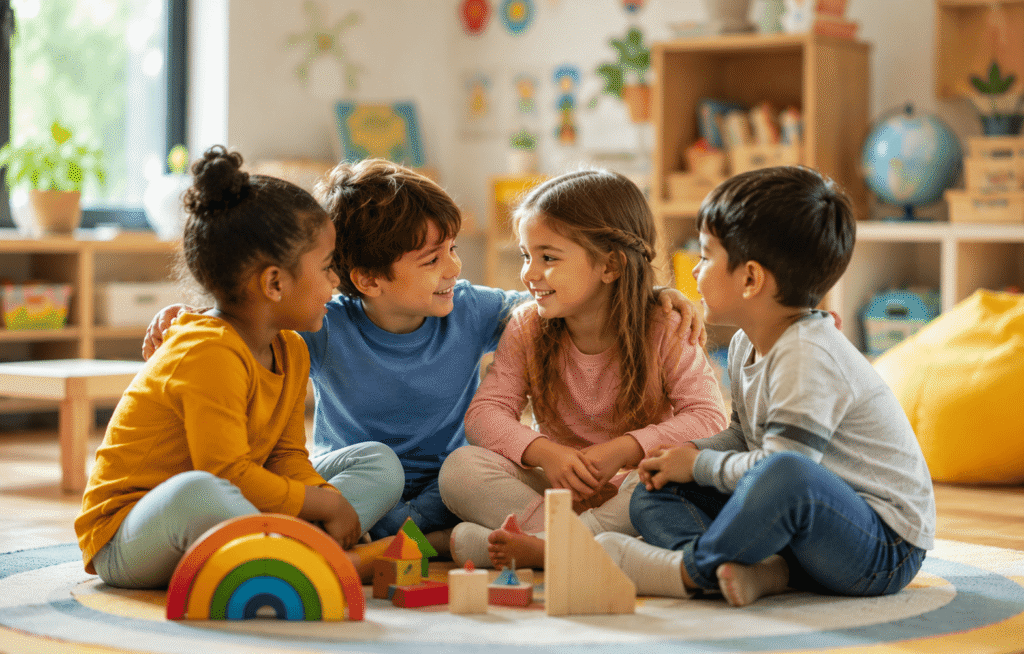
A child’s first friendships can be much more meaningful than they may appear. A simple game, shared toy, conversation, or moment of helping another child can teach important lessons about emotions, communication, patience, and cooperation. During the preschool years, children begin to understand that other people have different feelings, needs, and ideas from their own. These everyday interactions become an important part of their overall development.
At Akshaya Bala Kuteera, preschool learning goes beyond letters, numbers, and classroom activities. Opportunities to interact, play, communicate, and learn with other children can help create a supportive environment for emotional development and social growth. This is one reason relationships and friendships deserve an important place in early childhood education.
Why Are Friendships Important in Preschool?
Preschool friendships give children opportunities to practise skills that cannot always be learned through individual activities. When children play together, they need to listen, communicate, take turns, share, negotiate, and respond to one another. These experiences help children gradually understand how relationships work. A child may learn that taking turns makes a game more enjoyable, that kind words can make a friend feel better, or that disagreements can be solved through communication rather than frustration.
Friendships also give children a sense of belonging. Feeling accepted and included can help a child become more comfortable in a classroom and participate more confidently in activities.
How Do Friendships Support Emotional Development?
Emotional development involves learning to recognise, understand, express, and manage feelings. Preschoolers are still developing these abilities, so everyday social situations provide valuable opportunities to practise them. For example, a child may feel disappointed when a friend chooses another toy, excited when a friend joins a game, or upset after an argument. With suitable guidance from teachers and caregivers, these moments can become learning opportunities.
Children can gradually learn to name their emotions, understand what caused them, and consider appropriate ways to respond. This process can strengthen emotional awareness and self-regulation. Positive relationships also contribute to a child’s wider developmental environment. Research from Harvard’s Center on the Developing Child highlights the importance of responsive relationships and back-and-forth interactions in supporting early social and emotional development.
Can Preschool Friendships Build Social Skills?
Yes. Friendship is one of the natural ways children practise social skills. A preschool classroom can provide regular opportunities for children to work and play alongside their peers. During these experiences, children may practise:
- Sharing toys and classroom materials
- Taking turns during games
- Listening when another child speaks
- Asking for help appropriately
- Joining group activities
- Cooperating on simple tasks
- Expressing feelings with words
- Solving small disagreements
- Respecting another child’s choices
These skills may seem simple, but they form an important foundation for healthy relationships as children grow.
How Does Play Help Children Make Friends?
Play is one of the most natural ways for young children to connect with one another. Children do not always need formal lessons about friendship. They often learn through pretending, building, drawing, running, singing, storytelling, and playing games together.
During play-based learning, children have opportunities to communicate and respond to their peers. A group building a block structure, for example, may need to decide who will collect blocks, who will build, and how the structure should look. Such a simple activity can involve communication, cooperation, patience, problem-solving, and decision-making.
UNICEF India also highlights play as an important part of children’s development, helping them build skills such as problem-solving, communication, and social and emotional abilities. This makes play an important part of both friendship development and broader child development.
What Can Children Learn From Friendship Conflicts?
Not every preschool friendship experience will be smooth. Children may disagree over toys, interrupt one another, refuse to share, or become upset when a game does not go as expected. These situations are normal parts of learning social behaviour. Instead of viewing every disagreement as a problem, adults can treat appropriate conflicts as opportunities for children to learn.
A teacher might help children understand questions such as:
“What happened?”
“How did your friend feel?”
“How did you feel?”
“What could you do differently?”
Through age-appropriate guidance, children can begin to understand another person’s perspective and explore ways to resolve disagreements. Over time, these experiences can support empathy, communication, emotional regulation, and problem-solving.
How Does Friendship Build Empathy?
Empathy means beginning to understand and respond to another person’s feelings. Preschoolers are still developing this ability, and friendships provide many natural opportunities to practise it. A child may notice that a friend is crying and ask what happened. Another child may offer a toy to someone who feels left out. A child may learn to apologise after hurting a friend’s feelings.
These small moments can help children understand that their actions can affect other people. Teachers can support this process by helping children identify emotions and encouraging them to think about how their friends may feel. Over time, children can become more aware of emotions beyond their own immediate experiences.
Can Friendships Improve a Child’s Confidence?
Positive peer experiences can help children feel more comfortable participating in group settings. When a child finds a friend who listens, plays, or cooperates with them, the classroom can begin to feel like a familiar and welcoming place. A child who was initially hesitant may gradually become more willing to join a group activity. Another child may become more comfortable speaking during circle time after developing relationships with classmates.
This does not mean every child needs to be highly social. Children have different personalities and may develop friendships at different speeds. Some children enjoy large groups, while others prefer one or two close friends. A supportive preschool should allow children to develop social confidence without forcing them into uncomfortable interactions.
How Does Early Childhood Education Encourage Friendships?
Good early childhood education creates opportunities for children to interact meaningfully while also providing appropriate adult guidance. Classroom routines can encourage children to work together through group storytelling, creative activities, music, outdoor play, role-play, puzzles, and collaborative projects. Teachers can observe how children interact and step in when support is needed.
The goal is not to make every child become friends with everyone. Instead, it is to create an environment where children can practise respectful interaction and gradually develop healthy relationships. Responsive relationships between children and caring adults are also important. Harvard’s Center on the Developing Child notes that consistent, responsive interactions support the development of social and communication skills and contribute to a strong foundation for future learning.
What Role Does a Montessori School Play?
A Montessori school environment can also provide opportunities for children to develop independence, cooperation, communication, and respect for others through purposeful activities and interaction.
When children work alongside peers, they may observe one another, wait for materials, communicate their needs, and learn to respect another child’s concentration. Group experiences can complement independent learning by giving children opportunities to practise social and emotional skills. However, the most important factor is not simply the name of an educational approach. The quality of the classroom environment, teacher-child relationships, learning opportunities, and support for each child’s developmental needs all matter.
How Can Parents Support Preschool Friendships?
Parents can support friendship development without trying to control every social interaction. Children benefit from having opportunities to meet other children, play together, and gradually learn how to manage everyday social situations.
At home, parents can talk about feelings and relationships in simple language. After a playdate or school day, questions such as “What did you enjoy playing today?” or “How did your friend feel?” can encourage children to reflect on their experiences. Parents can also model respectful communication. Children observe how adults listen, apologise, solve disagreements, and show kindness.
Simple activities can also encourage friendship skills:
- Encourage cooperative games rather than only competitive games.
- Read stories that involve friendship and emotions.
- Help children name different feelings.
- Encourage children to take turns during family activities.
- Praise kindness, patience, sharing, and helpful behaviour.
- Give children time to solve small disagreements with appropriate guidance.
What Should Parents Look for in a Preschool?
When choosing a preschool, parents often consider academics, safety, location, facilities, and teaching methods. Social and emotional development should also be part of that decision. A supportive preschool environment should give children opportunities to interact with peers while feeling safe and respected. Parents can observe whether teachers listen to children, encourage cooperation, handle conflicts calmly, and create opportunities for group participation.
It can also be useful to ask how the preschool supports children who are shy, adjusting to a new environment, or finding it difficult to communicate with peers. The right environment can help children develop not only early academic abilities but also the social and emotional foundations they need for future learning.
Why Does Friendship Matter for Long-Term Development?
The friendships children form during the preschool years are not simply about having someone to play with. These relationships give children repeated opportunities to practise communication, empathy, cooperation, emotional regulation, and problem-solving. These abilities are useful far beyond preschool. As children progress into primary school and later stages of education, they continue to interact with classmates, teachers, teammates, and wider communities.
Early experiences therefore contribute to a broader foundation for child development. UNICEF notes that the early years are a significant period for laying the foundations of learning and development, including social and emotional skills.
Building Friendships Through Meaningful Preschool Experiences
Preschool is an important stage when children begin expanding their world beyond their immediate family. Their classmates become part of their daily experiences, and simple interactions can teach valuable lessons about communication, kindness, patience, empathy, and cooperation. Friendships do not need to be perfect to be meaningful. A shared game, a solved disagreement, or a moment of helping another child can become a small step toward stronger emotional development and social confidence.
At Akshaya Bala Kuteera, meaningful early learning can include opportunities for children to explore, play, communicate, and develop relationships in a supportive environment. By giving children space to build positive connections with their peers, preschool can help lay a strong foundation for healthy social and emotional growth.
Frequently Asked Questions
1. Are preschool friendships important for child development?
Yes. Preschool friendships provide children with everyday opportunities to practise communication, cooperation, empathy, sharing, turn-taking, and emotional regulation. These experiences can contribute to social and emotional growth alongside other areas of child development.
2. How do friendships help preschoolers emotionally?
Friendships expose children to different emotions and social situations. Through playing, sharing, cooperating, and resolving small disagreements, children can gradually learn to recognise feelings, express themselves, understand others, and manage emotional responses.
3. What if a child does not make friends easily?
Not every child develops friendships at the same pace. Some children need more time to feel comfortable in a new environment. Teachers and parents can support them by creating gentle opportunities for interaction without putting pressure on them to socialise immediately.
4. Can play-based learning improve social skills?
Yes. Play naturally encourages children to communicate, cooperate, negotiate, take turns, and solve problems. Group play can therefore support social and emotional learning while keeping the experience enjoyable and age-appropriate.
5. How can parents teach children friendship skills?
Parents can model kindness and respectful communication, talk about emotions, read stories about relationships, encourage cooperative play, and help children understand how their actions affect others. Small everyday conversations can make a meaningful difference.