

How Play-Based Learning Boosts Brain Development in Young Children
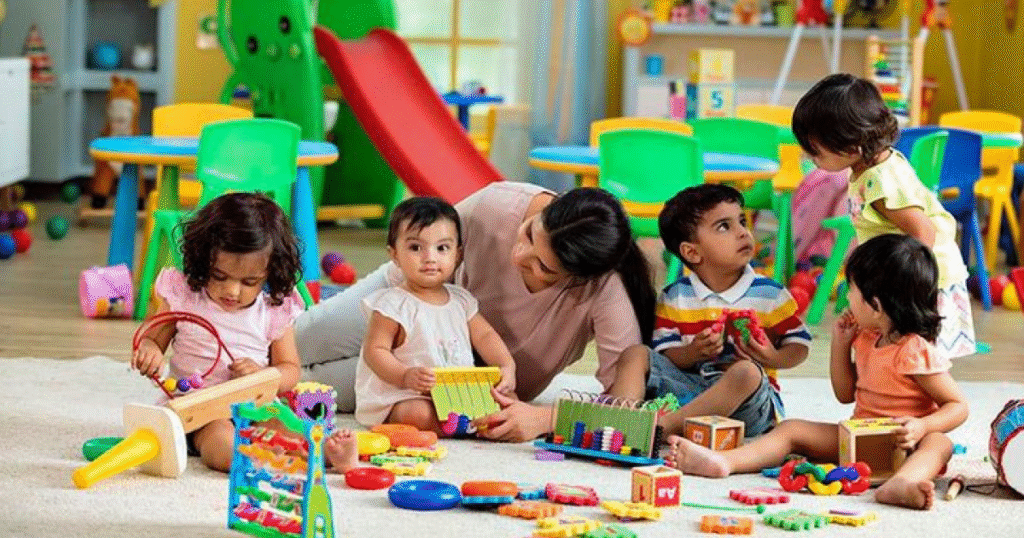
Children learn best when they are happy, curious, and engaged. In early childhood, play is not just fun – it is one of the most powerful ways young brains grow and develop. Through play-based learning, children explore the world, build essential skills, and form strong neural connections that support lifelong learning.
Understanding how play shapes brain development helps parents and educators create meaningful learning experiences during the most important years of a child’s growth.
The Early Years: A Critical Period for Brain Growth
A child’s brain develops rapidly during the first few years of life. During this time, experiences shape how the brain builds connections between neurons. Positive, engaging activities strengthen these connections, while passive learning limits development.
Play-based learning provides rich experiences that stimulate multiple areas of the brain at once – supporting cognitive, emotional, physical, and social development together.
Play Encourages Active Thinking
When children play, they make decisions, solve problems, and experiment with ideas. Whether stacking blocks, solving puzzles, or pretending to run a shop, children are constantly thinking and adapting.
These activities help:
Strengthen memory and attention
Develop problem-solving skills
Improve logical and creative thinking
Active play encourages children to learn by doing, which helps information stick more effectively.
Language Development Through Play
Play creates natural opportunities for children to communicate. Talking during play helps children expand their vocabulary, improve sentence structure, and understand how language works in social situations.
Through storytelling, role-play, and group activities, children learn to:
Express ideas clearly
Listen and respond to others
Ask questions and share thoughts
Strong language skills developed through play support reading, writing, and academic success later on.
Social and Emotional Growth
Play-based learning teaches children how to interact with others. While playing together, children learn to share, cooperate, and manage emotions.
These experiences help children:
Build empathy and emotional awareness
Learn patience and self-control
Develop confidence and independence
A secure emotional foundation supports healthy brain development and positive behaviour.
Physical Play Strengthens the Brain
Movement plays a vital role in brain growth. Activities such as running, jumping, climbing, and dancing improve coordination and strengthen connections between the brain and body.
Physical play:
Enhances motor skills
Improves focus and concentration
Supports overall brain health
When children move, their brains receive more oxygen, boosting learning and alertness.
Creativity and Imagination Fuel Brain Development
Imaginative play allows children to explore new ideas and perspectives. Pretend play helps children understand emotions, develop empathy, and practice real-life situations.
Through creativity, children:
Build flexible thinking skills
Improve emotional expression
Develop originality and confidence
Imagination plays a key role in shaping innovative and adaptable minds.
Why Play-Based Learning Matters in Early Education
Preschools that use play-based learning create environments where children feel safe to explore, make mistakes, and grow. Learning becomes enjoyable rather than pressured, allowing children to develop naturally at their own pace.
Play-based education supports:
Holistic brain development
A love for learning
Better readiness for formal schooling
Final Thoughts
Play is not a break from learning – it is learning. Play-based learning supports brain development by encouraging curiosity, creativity, communication, and emotional growth in young children.
By giving children the freedom to play, explore, and imagine, we give their brains the foundation they need to grow strong and thrive.
🌈 When children play, their brains grow. 🌈